Why Repetition Is the Key to Success in Your Creative Business
If your business feels harder than it should, there’s a decent chance you’re not doing too little. You’re doing too many different things.
I’m Cynthia from Doodle and Design Studio, where I help women learn digital art and turn that art into income, and I want to talk about something that affects speed, momentum, and confidence, and almost no one talks about it directly, using repetition in creative business.
When things feel slow, most people assume they need a better idea, a better strategy, or a whole new direction.
But a lot of the time, the issue isn’t effort, or talent, or creativity. It’s that you keep putting yourself in “newbie mode” by switching tasks constantly, instead of repeating one process long enough to actually get good at it.
Let’s fix that.
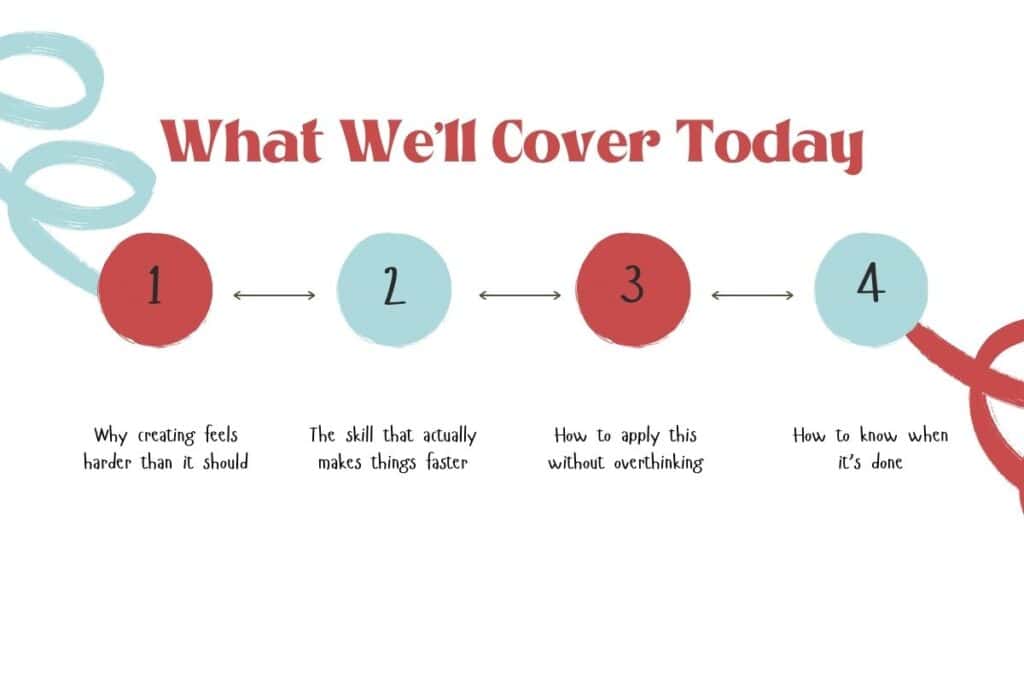
Table of Contents
If progress feels slow, you might be switching too much
It’s easy to look at a slow month and decide something’s wrong with you or your business.
So you try a new product. Then a new platform. Then a new offer. Then a new workflow. Then a new tool, because obviously you needed another app to keep track of the other apps.
And the wild part is, you can be working all the time and still feel like you’re moving at the pace of a tired snail with a tiny backpack.
Here’s what that can look like:
- Effort feels high, because you’re doing a lot.
- Progress feels low, because every “new thing” comes with a new learning curve.
I learned this the hard way.
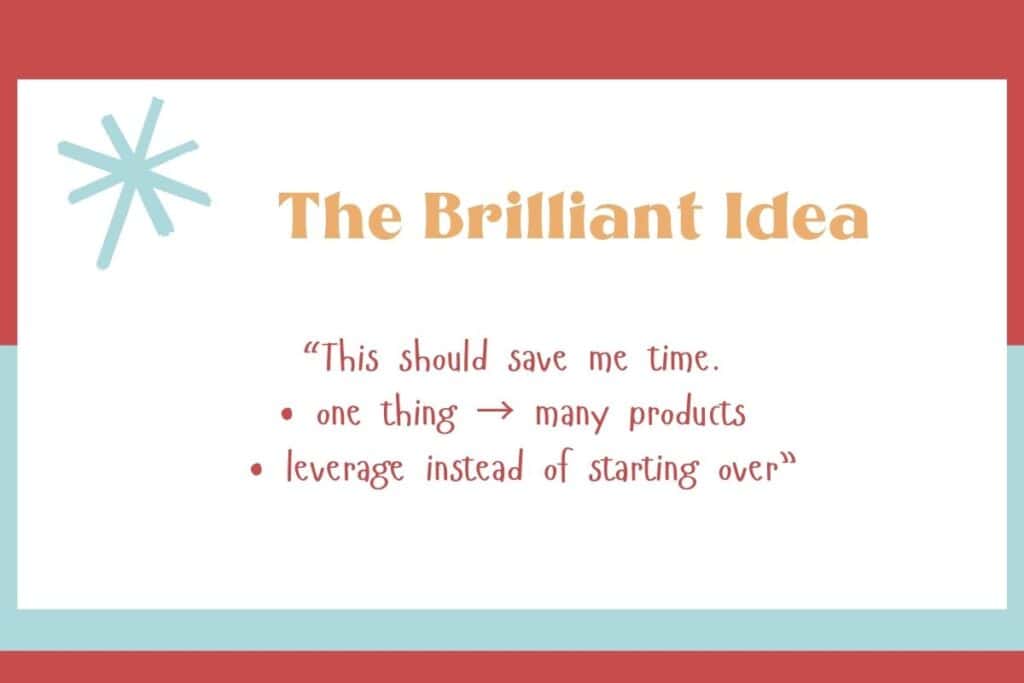
I had what I thought was a genius plan: make one piece of art, then reuse it across multiple products.
On paper, it sounded efficient. In reality, I was productive, sure, but it was also the scenic route. Because every time I jumped to a new product, I had to learn new steps, new rules, new tools, and make a fresh pile of decisions.
If there’s a hardest way to do something, I will find it first. It’s basically a personality trait.
The good news is the fix is simple, even if it’s not always comfy.
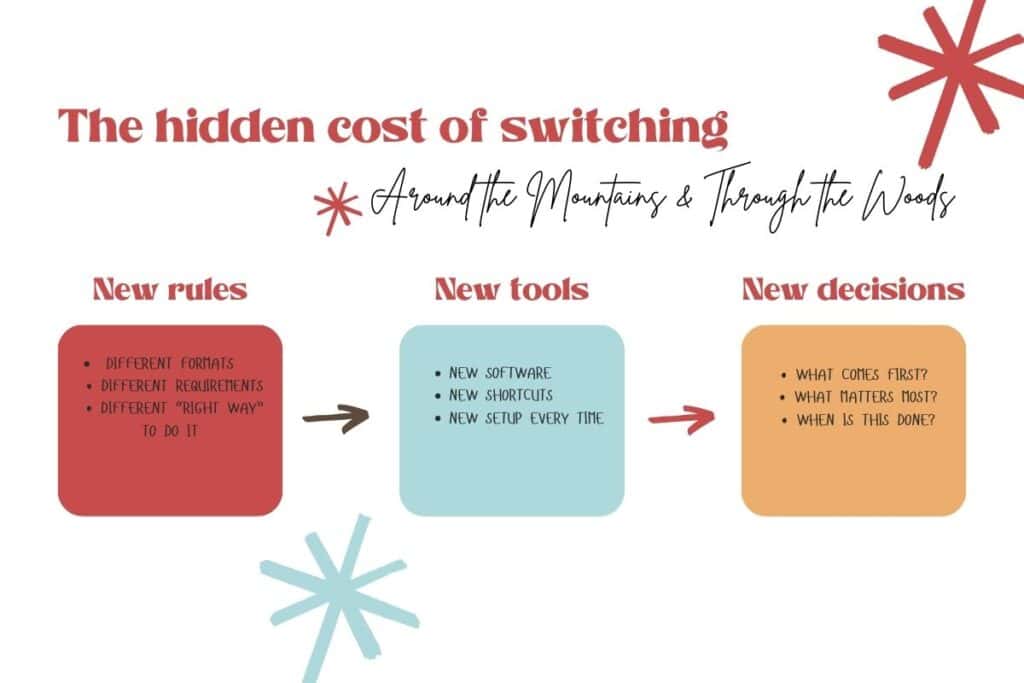
Task switching resets your brain back to zero
Every time you switch what you’re doing in your business, your brain has to reset back to zero. You’re not really executing, you’re translating.
You’re trying to remember:
What did I do last time? Where did I save that file? Which size was it? What settings did I use? Why does this feel unfamiliar again?
Learning mode is expensive. Not money expensive (sometimes that too), but brain expensive.
Here’s what it costs:
- More time, because you’re figuring it out again.
- More energy, because “new” takes effort.
- More focus, because your brain is scanning for danger like, “Are we about to mess this up?”
💡Want to Start Selling Your Art?
The Art to Income Membership gives you one beginner-friendly project each month, trend ideas, templates, and step-by-step help — so you’re not stuck wondering what to make or how to start.
Perfect if you’ve got an iPad, some creativity, and no clue what you’re doing (yet). We’re all figuring it out together, one small win at a time.
🎨 Join the Membership for $17/monthAnd when you live in that mode, everything starts to feel heavy. You can be doing all the right stuff, and still feel burned out because you’re constantly asking yourself to start over.
This is also where people get stuck being busy but not effective. Your calendar is full, you’re putting in the hours, you’ve got no time to scroll, and yet the needle isn’t moving. A big reason is that the needle is bouncing all over the place.
Also, quick reality check: This isn’t a motivation problem. If you’re reading this, you’re probably working really hard. This is a process problem.
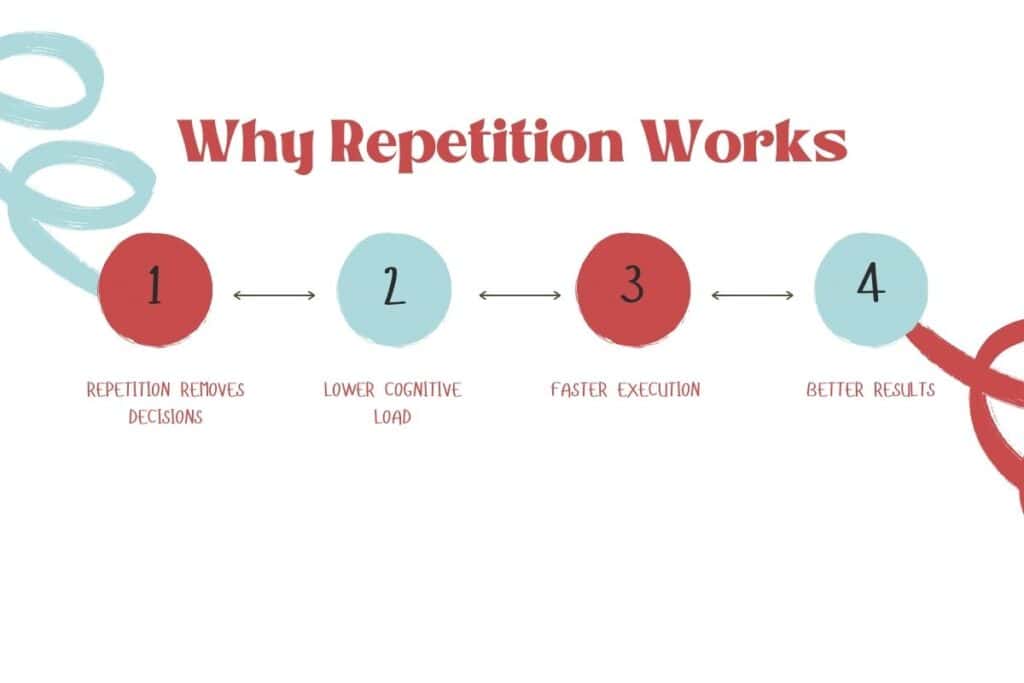
Why repetition makes you faster (and less mentally fried)
Why is repetition the key to success in a creative business?
Repetition is the key to success in a creative business because it reduces decision fatigue, builds muscle memory, and turns unfamiliar tasks into automatic workflows. When creators repeat the same process, they work faster, make fewer mistakes, and gain confidence without constantly starting from scratch.
Everything changed when I committed to doing the same thing over and over until I knew it forward and backward.
Not forever. Not for the rest of my life. Just long enough that the steps stopped feeling like a pop quiz.
When you repeat the same process:
- Your mental load drops, because fewer choices pop up.
- Your steps turn into muscle memory, so you stop hesitating.
- Your brain relaxes because it recognizes the pattern and goes, “Oh, this again. Cool.”
That’s when speed shows up. Not because you’re rushing, but because repetition removes decisions. Same steps, same tools, same flow. You stop pausing every five minutes to rethink your entire personality.
It’s kind of like the snowball effect people talk about in budgeting. At first, it feels slow. Then it starts rolling on its own, and suddenly you’ve got momentum.

Repetition also has a reputation problem. It sounds boring. But even in design, repetition is a core principle that helps things feel cohesive and intentional, and the same idea applies to how you work.
This article on the benefits of repetition in life and business puts words to what a lot of us feel: repetition gets results, even when it isn’t flashy.
And yes, repetition can feel uncomfortable, because it removes the shiny distraction. When the noise disappears, you start noticing where you hesitate, where your steps are clunky, where you overthink.
That’s not bad news. That’s data.
Frustration is information. Annoying information, but still useful.
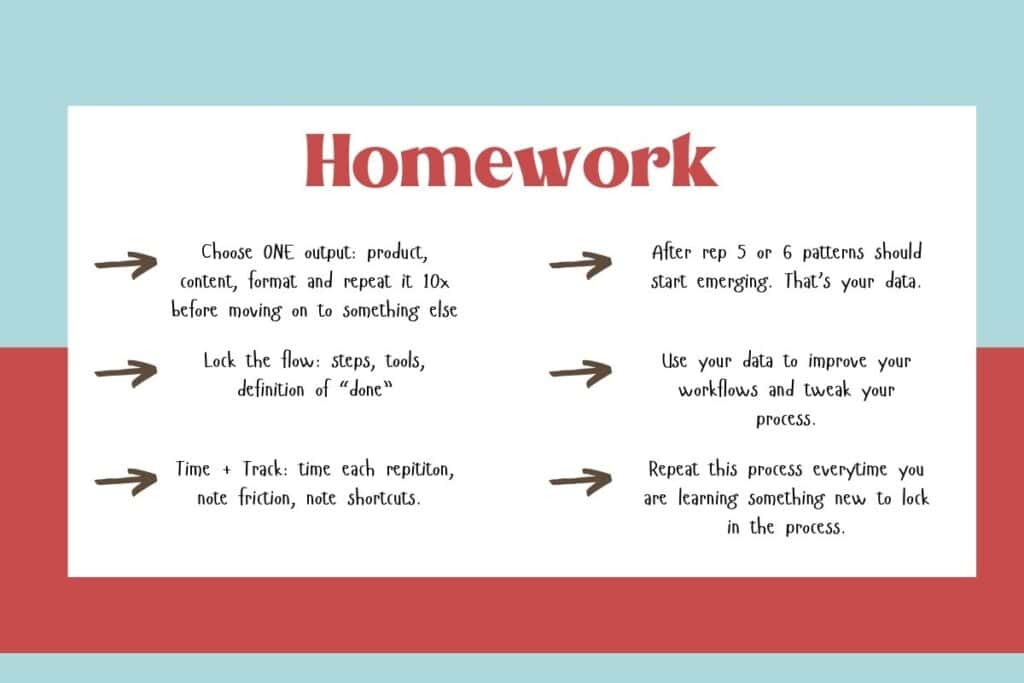
The 10 repetition challenge (simple, not easy)
Here’s what to try if creating in your business feels harder than it should.
Pick one thing you create.
One product, one offer, one content format, one system. Not forever, just for the next 10 repetitions.
Lock in the process:
- Same steps
- Same tools
- Same definition of done
Then repeat it 10 times on purpose.
Time yourself each round. Take notes on what slows you down and what gets easier. Around repetition five or six, patterns start showing up, and that’s where the gold is. You stop guessing and start improving the actual process.
If you want to make this extra practical, track it like this:
| Repetition | Time spent | What slowed me down | What felt easier |
|---|---|---|---|
| 1 | |||
| 2 | |||
| 3 | |||
| 4 | |||
| 5 |
How to choose the right thing to repeat
You don’t need the perfect choice. You need a reasonable one.
Pick something that:
- You’re still learning.
- You already have access to (no five new tools required).
- You can finish in a short window of time.
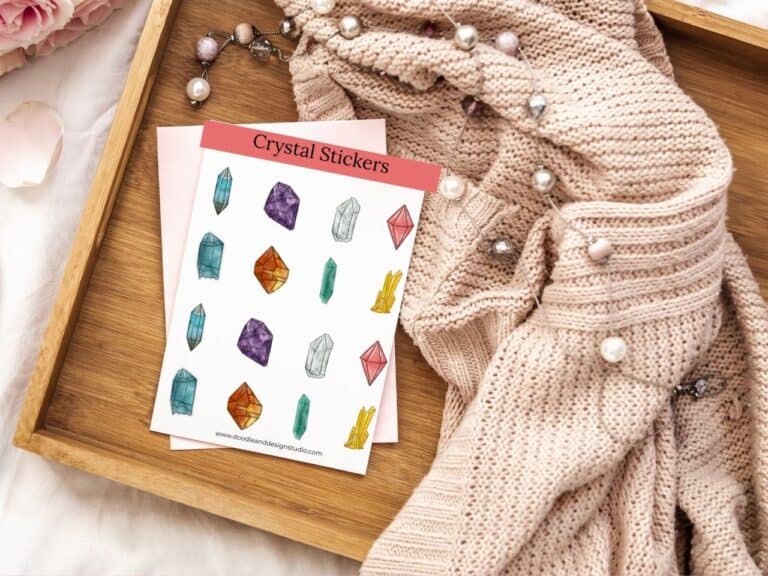
For a lot of digital artists, a great “repeatable” task is a small, finishable project like a sticker. If that’s you, try create your first Procreate sticker in 10 minutes and then repeat the same setup, same canvas size, same export steps, ten times with different themes.
If you’re stuck choosing between tools, decide once and stick with it for the 10 reps. This comparison of Procreate vs Canva for sticker design can help you pick the tool that fits your brain today.
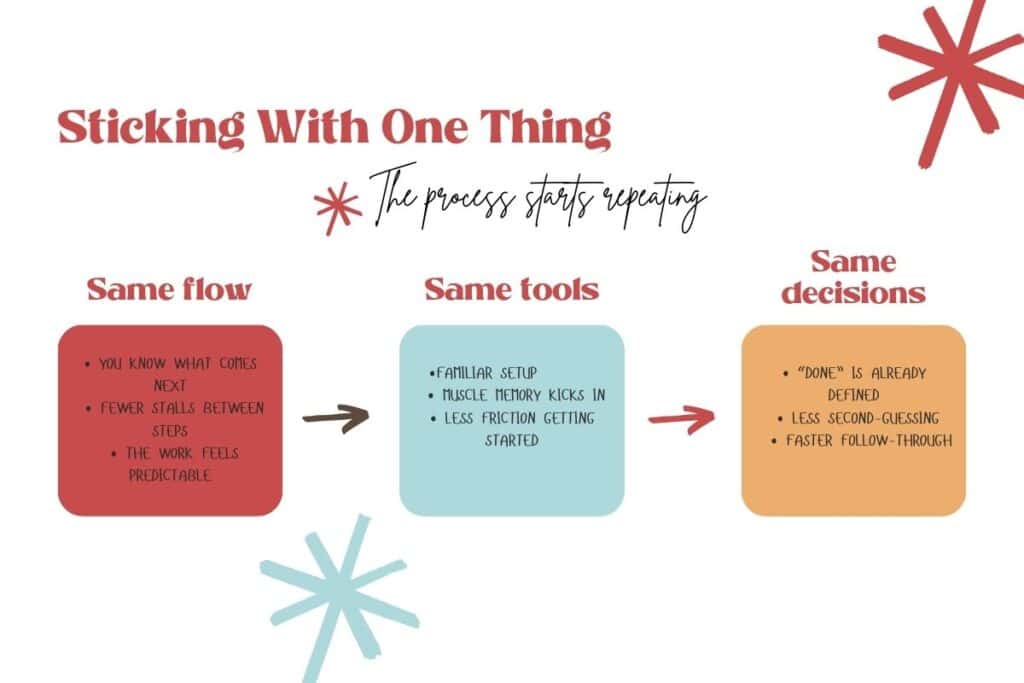
What “success” looks like while you repeat
You’re not going to love every rep. Sometimes you’ll be bored. Sometimes you’ll be annoyed you’re doing it again.
Wins usually look like this:
- “That was a little easier than last time.”
- “I didn’t get stuck as long.”
- “I knew what to do next.”
- “I found one tiny improvement I can keep.”
That’s it. That’s the whole point. Fewer stalls, more little breakthroughs.
have you joined the art to income: create & Sell digital products facebook group?
If you’ve ever said, “I want to draw digitally, but I have no idea where to start,” this is your sign.
We learn Procreate tricks, share designs, celebrate tiny wins, and cheer each other on as we start selling what we make.
💕Join Us on Facebook✨
Define “done” so you stop tweaking forever
When you’re learning something new, “done” feels fuzzy. So you overthink, over tweak, and nitpick your work into the ground.
Repetition fixes this because it forces you to decide what finished enough actually means.
The fastest way to define done is to ask:
What must this do to be complete?
Maybe your product listing needs to clearly show what the customer gets.
Maybe your Instagram post needs to make one point.
Maybe your sticker pack needs to export cleanly as a PNG with a transparent background.
If it’s doing the job it needs to do, it’s done. Walk away.
Also, repetition doesn’t mean you’re stuck forever. This is your training phase. Like learning to drive, it feels clunky at first. Then one day you realize you’re not thinking about every tiny step, you’re just doing it.
And if you have new ideas while you’re repeating, write them down. Save them for later. You don’t need fewer ideas. You need fewer resets.
💖 Key Takeaways
💖 Repetition creates speed — not talent, motivation, or better ideas.
💖 Constantly switching projects keeps you stuck in beginner mode.
💖 Familiar workflows reduce mental load and decision fatigue.
💖 Momentum builds when you repeat one process long enough to feel automatic.
💖 Defining “done” is what stops endless tweaking and burnout.
💖 FAQs
💖 Why does repetition matter in a creative business?
Repetition lowers mental load. When your brain recognizes the process, you move faster, hesitate less, and finish more consistently.
💖 How many times should I repeat something before changing it?
Ten repetitions is a great starting point. Around reps five or six, patterns show up that reveal what’s actually slowing you down.
💖 Does repetition kill creativity?
No — it protects it. Familiar processes free up creative energy instead of draining it with constant decision-making.
💖 What’s the best thing to repeat as a digital artist?
Small, finishable projects like stickers, simple printables, or product listings using the same canvas, export steps, and workflow.
💖 How do I stop overworking something?
Define “done” based on function. If it does what it needs to do, it’s finished — even if it’s not perfect.
If business feels heavier than it should, slow down the switching and give your brain a break.
Repetition isn’t about doing less work, it’s about doing familiar work long enough that it stops draining you and starts paying you back with speed, confidence, and momentum.
If choosing your one thing feels sticky, take the Find Your Next Digital Project Quiz and use it to pick a single project you can repeat. If you want guided projects so you’re not constantly reinventing the wheel, check out the ATI membership details.
🎥 Prefer to learn by watching?
I’ve got a YouTube channel full of quick, no-pressure tutorials made for tired, creative souls like you.
Subscribe here and catch your next creativity boost, one sticker at a time.
Love and messy buns,
❤️
Cynthia McDonald
Helping women find creativity in the chaos — with stickers, stationery, and a little bit of fun
This post may contain affiliate links. I may earn a commission if you make a purchase at no extra cost to you.
Make sure and grab your favorite Pinterest Pin and Save it to your Digital Art Pinterest Board